You Don’t Need 6 Acres to Be a Homesteader
When most people picture a homestead, they imagine acreage. Lots of acreage.
A farmhouse surrounded by gardens. Fruit trees stretching across the property. Chickens scratching in the yard. Maybe goats, horses, a barn, a pond, an orchard, and enough land to grow and preserve a substantial portion of your food.
That was the dream I had, too.
And here at Magnolia Hill Homestead, I’ve been fortunate enough to experience much of it.
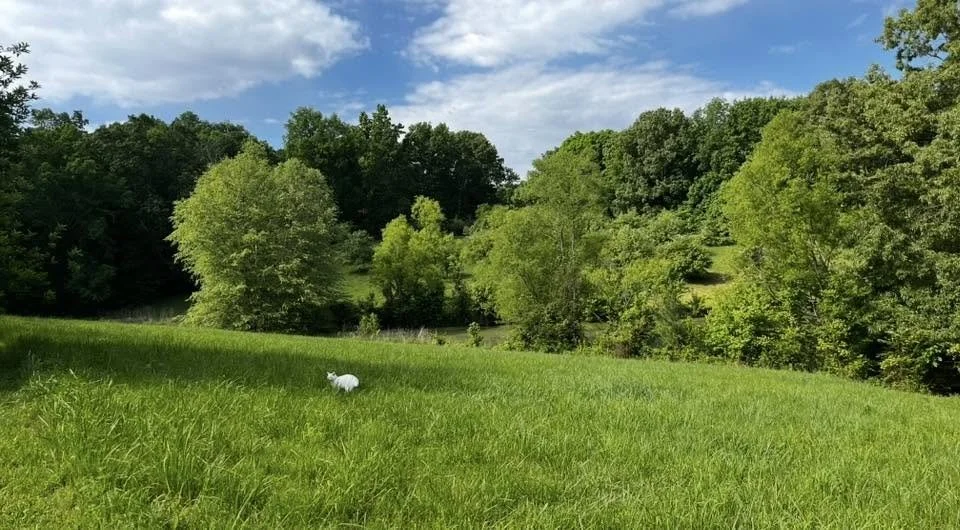
We have six acres here in Kentucky, and this land has given us more than I could have imagined when we made the decision to leave the city and begin this chapter of our lives.
But living this life has taught me something I think is important to talk about:
You don't have to own a lot of land to live like a homesteader.
In fact, you may discover that you don't want as much land as you originally thought.
The Part Nobody Tells You About Owning Acreage
There is a romantic side to owning property (especially in our lush region of Kentucky), and I will never stop appreciating it.
Walking through our orchard in the morning. Gathering herbs from the garden. Watching the seasons change around the pond. Foraging for plants growing wild on our property. Collecting eggs. Preserving something we grew ourselves…
These are the moments I dreamed about.
But there is another side to acreage that doesn't always make it into the pretty photographs.
Land requires time.
It needs mowing, trimming, maintaining, repairing, clearing, fencing, managing, and watching.
And then there are the animals.
Animals are wonderful, but they are also a commitment every single day. They don't care if you're tired, traveling, sick, or simply want to sleep in.
Over the years, Tony and I have learned a lot about what we genuinely enjoy doing and what quietly drains us.
And we're both in our 50s now.
That changes the conversation.
We've actually downsized our animals to just our poultry after five years, and surprisingly, it feels really good.
It feels more aligned with the amount of time and energy we want to give. For now.
That doesn't mean we love animals any less.
It means we're learning to build a life that works with our energy instead of constantly asking more of it.
Maybe We Don't Need More. Maybe We Need Less.
If I were designing our ideal property today, I honestly think somewhere between a half-acre and two acres could be incredibly fun.
Enough room for a beautiful kitchen garden.
A few fruit trees.
Herbs.
Chickens.
A little space for flowers and pollinators.
Definately a greenhouse.
A place to sit outside and watch the seasons change.
And enough land to feel connected to nature without spending our lives maintaining it.
That realization has completely changed the way I think about homesteading.
Because what if the goal isn't to produce everything yourself?
What if the goal is to become more capable, more intentional, and more connected to where your food and resources come from?
You Can Homestead Without Growing Everything Yourself
One of the biggest misconceptions about modern homesteading is that self-sufficiency means doing everything yourself.
I don't believe that anymore.
There is tremendous value in building relationships with the people around you.
Buy tomatoes from a local farmer and preserve them.
Get berries from a nearby farm and freeze or dehydrate them.
Visit the farmers market.
Trade eggs for vegetables.
Buy locally grown herbs and learn how to dry them.
Learn how to ferment.
Bake your own bread.
Grow herbs on your patio.
Make your own household cleaners.
Learn herbalism.
Reduce the amount of waste leaving your home.
Cook from scratch.
Learn to preserve food when it is abundant instead of buying it out of season.
You don't have to grow the entire garden.
You just have to participate in the process.
THAT to me is homesteading.
What About Our Six Acres?
I don't want this to sound like we're unhappy with our land, because it’s quite the opposite.
Magnolia Hill has given us something incredibly valuable: perspective.
We have the option to create more fencing and make better use of some of the property, but we've also intentionally allowed much of our back acreage to return to the wild.
And I love that.
Our back four acres are essentially becoming a wildland.
We still have our daily walks around the pond. We wander through the orchards. We forage in fields (and invite our community to come with us) that have never been sprayed with chemicals. We watch wildlife move through and raise their young on the property.
We don't necessarily need to develop every inch of land simply because we own it.
Sometimes the greatest thing you can do with a piece of land is leave it alone.
That has been another unexpected lesson for me.
Think About the Life, Not Just the Property
If you're dreaming about buying a homestead, I want you to think beyond the number of acres and the price tag.
Ask yourself:
How much land do I actually want to maintain? (In the heat and throughout the winter!!)
How much time do I want to spend mowing?
How many animals do I genuinely want to care for?
How much garden can I realistically tend in this climate?
Do I want to preserve hundreds of jars of food every year, or would I rather buy some of it locally and preserve only what we can actually use?
What will this property feel like when I'm ten or twenty years older? - This is a big one for us…
Will the land give me energy? Or will it constantly ask for more of it?
These are questions worth asking before you fall in love with the farmhouse, the barn, the beautiful acreage, or the bargain price.
Because a homestead isn't just a piece of property.
It's a lifestyle you're agreeing to maintain.
And the most beautiful homestead is not necessarily the biggest one.
It's the one that allows you to live the life you actually want.
The New Homesteading
This is why I'm becoming increasingly passionate about talking about urban and small-space homesteading, here at Magnolia Hill.
Because I don't want someone living in a neighborhood, an apartment, a townhouse, or on a tiny piece of property to think they have to wait for their dream acreage before they can begin.
[I began in our city beach house back in 2018. I started growing a garden, buying local + bulk, cooking from scratch, canning & making my own products. I also became certified in Herbalism. That was my little Urban Homestead that was completely sufficient.The only thing I couldn’t do was raise chickens - but I have other ideas that I can share if you’re interested.]
You can start right now.
Grow something.
Preserve something.
Make something.
Learn something.
Buy something local.
Waste a little less.
Cook something from scratch.
Plant an herb garden in a pot.
Learn what grows wild around you.
Build relationships with the farmers and makers in your community.
(If you’re in our area, take The Farm Stand Trail)
Start with one skill.
Then another.
And another.
Homesteading isn't a measurement of acreage.
It's a mindset.
It's the decision to become a little more connected to your food, your home, your land, your community, and your own ability to provide for yourself.
And perhaps the greatest lesson our six acres has taught me is this:
You don't need more land to create a richer life. Sometimes, you simply need to become more intentional with the land you already have.
And that is where I want to take Magnolia Hill next.
Not away from homesteading.
Deeper into it.