Rebuilding a Home: How Slow Living Transforms a House Into a Sanctuary
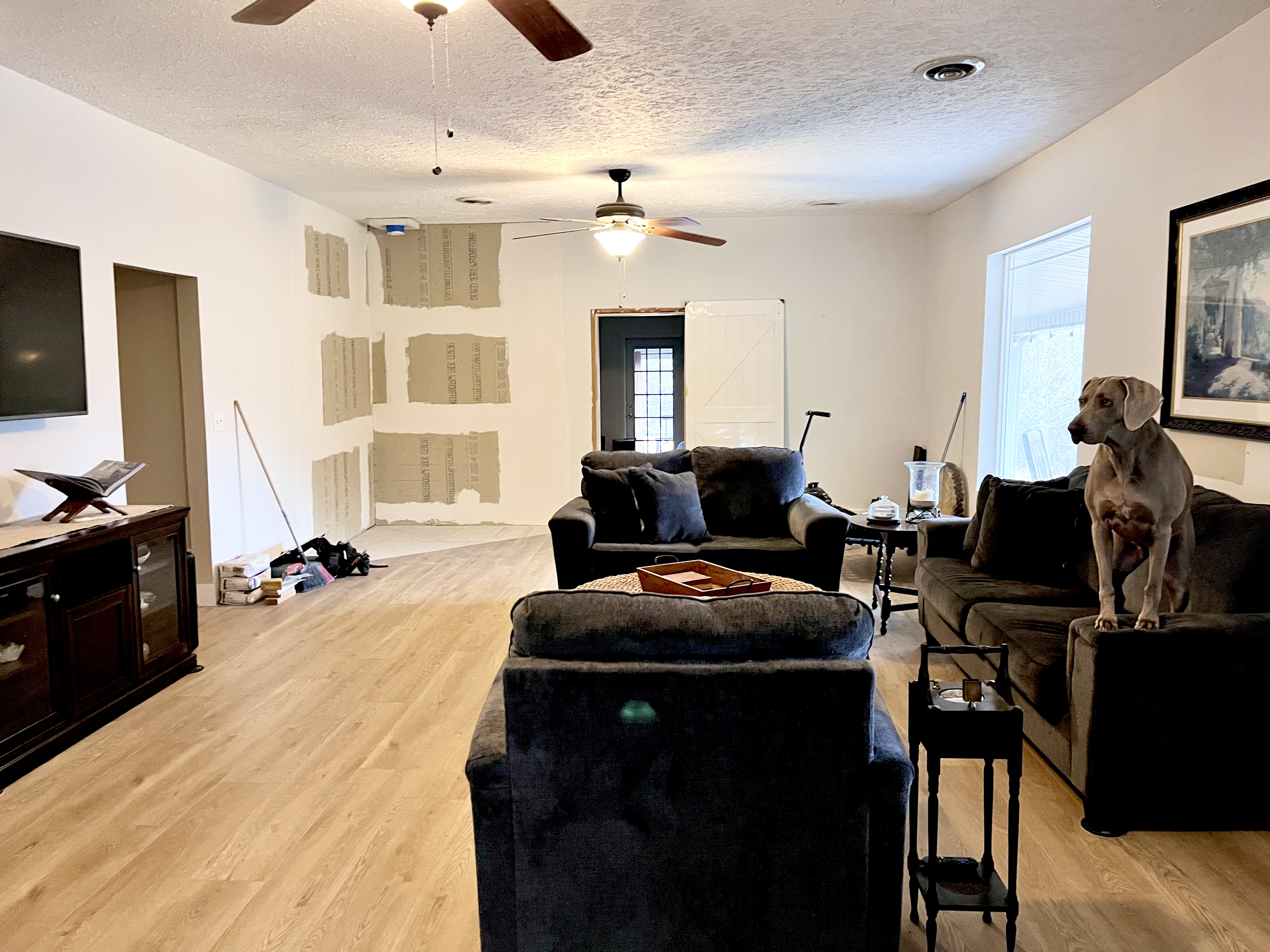
There is a version of rebuilding a home that no contractor can do for you.
We’re not just talking about demolition here - this starts with disruption.
Sometimes you move across the country.
Sometimes you renovate an old farmhouse.
Sometimes life simply shifts, and the home that once fit you doesn’t anymore.
Rebuilding a home is rarely about square footage.
It’s about alignment.
When a House No Longer Reflects Your Life
We talk about homestead renovation like it’s a design project.
New floors.
Fresh paint.
Better lighting.
But rebuilding a home after major life change [relocation, reinvention, burnout, midlife awakening] there’s something deeper going on…
We begin to ask:
Does this space support who I am becoming?
When I left California and rebuilt my life in rural Kentucky, I thought I was just changing geography.
What I was actually doing was rebuilding my nervous system.
The speed.
The noise.
The expectations.
They didn’t follow me here.
But the habits did.
Rebuilding a Home Is Rebuilding Your Rhythm
A slow living lifestyle doesn’t magically appear when you move to the country.
You build it.
Intentionally.
Rebuilding a home means designing daily rhythm:
– Where does the morning light fall?
– Is there space to cook from scratch?
– Is there a table where people gather?
– Is there room to grow herbs, dry flowers, store jars?
– Is there quiet?
When I ponder Holistic Home Design, I’m not chasing aesthetics (although I love good ambiance). I’m chasing regulation.
A true sanctuary lowers your shoulders when you walk in.
It supports:
– scratch cooking
– herbal remedies
– community gatherings
– creativity
– rest
When your home supports your nervous system, everything else shifts.

The Hidden Grief of Starting Over
No one talks enough about this part.
Rebuilding a home after rural relocation or life reinvention carries grief.
You miss the version of yourself who moved easily through the old environment.
You miss familiarity.
You miss certainty.
But here’s the truth:
Starting over in midlife is accepting refinement - [we. did. not. fail].
You’re not rebuilding because you broke something, you are rebuilding because you outgrew it.
Renovation as a Spiritual Practice
When we tore apart sections of our home to repair floors and foundations, I was forced into one room for weeks.
No office.
No creative space.
No place to eat at the table.
No rhythm.
It’s been uncomfortable.
But it revealed something powerful:
Rebuilding a home strips away distraction.
You see what you truly use.
What you truly need.
What you’ve been holding onto out of habit.
Room by room, you get to ask:
Does this belong in the life I’m building now?
This is intentional living in practice.
And I’m not striving for pinterest perfect. As my mom used to say, “I want my home clean enough to be healthy, and messy enough to be happy”.
Yes, please.
What Rebuilding a Home Really Means
For me, it means:
Creating spaces that encourage slow mornings.
Building a kitchen that supports cooking from scratch and food preservation.
Designing an apothecary for herbalism and holistic health.
Making room for workshops, retreats, and community.
Choosing sustainability over speed.
I’m not striving for perfection, this time around. I’m calling in peace, presence, ease… As my mom used to say, “I want my home clean enough to be healthy, and messy enough to be happy”. Yes, I want that!
I’m building a life that reflects our values. Seasonal living, rural self-sufficiency, nervous system healing, creative restoration.
You Don’t Have to Move to Rebuild
You don’t need acreage.
You don’t need a renovation budget.
You don’t need to leave the city.
Rebuilding a home can start with:
Clearing one shelf.
Reclaiming one ritual.
Planting one herb.
Turning off one notification.
Sanctuary begins with intention.
The most powerful rebuild doesn’t happen in the drywall, it happens in the decision.
I will create a life that feels like home.