What Can You Legally Sell From a Roadside Stand?
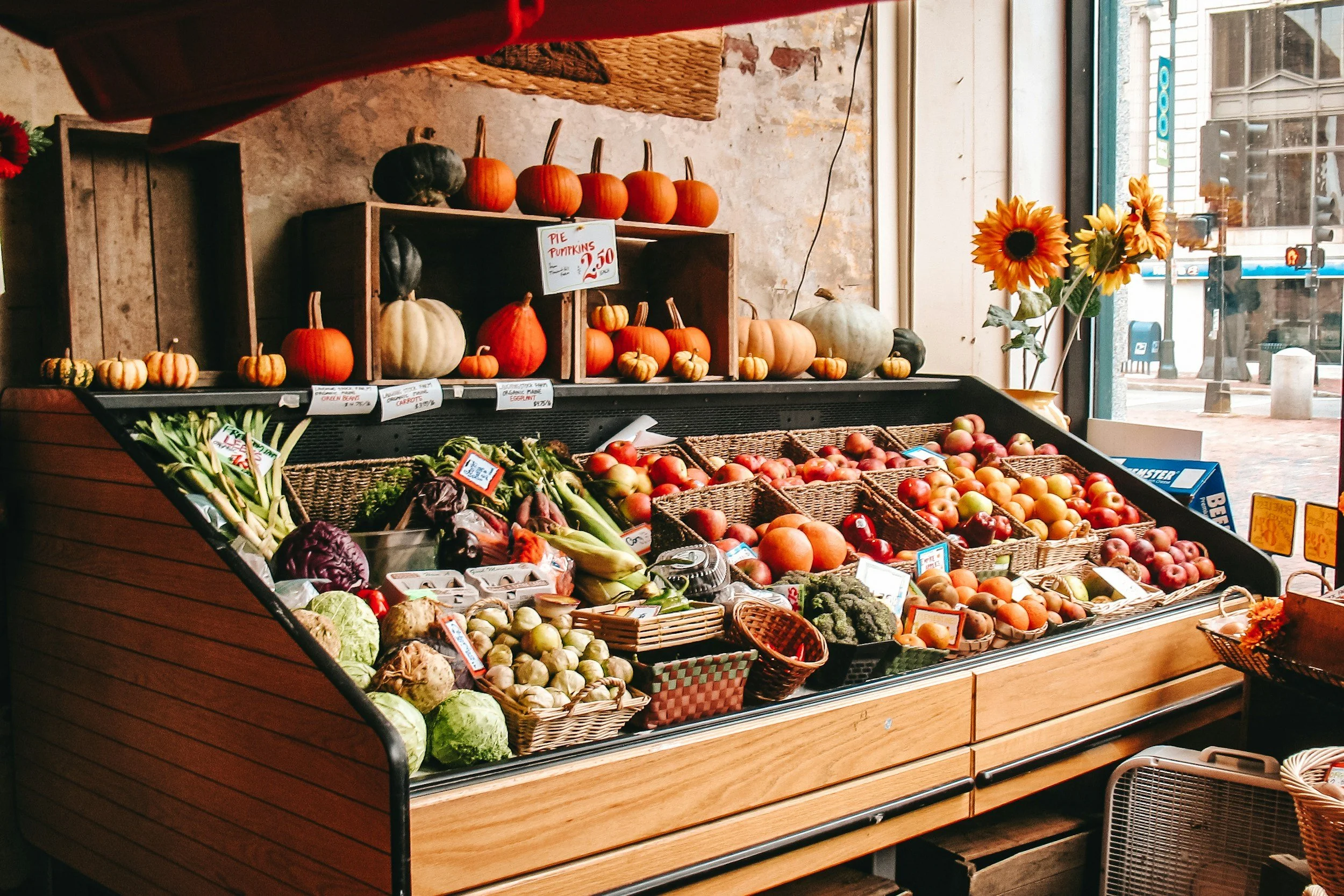
What Can You Legally Sell From a Roadside Stand?
A Practical Guide for Modern Homesteaders
Across the country, something quiet but powerful is happening.
People are growing food again. They’re raising animals, saving seeds, baking bread, and rediscovering skills that once formed the backbone of local communities. And naturally, many are asking the same question:
Can I sell this?
Whether it’s a small roadside stand, a table at the end of a driveway, or a few extra jars shared with neighbors, selling homestead-grown and handmade goods can be a meaningful way to support your household while serving your community. The challenge isn’t willingness, it’s clarity.
This guide exists to offer that clarity.
While the details vary by state, the structure of the law is remarkably similar across the U.S. Once you understand the categories, you can confidently determine what’s allowed where you live.
A Note for Readers in Any State
Every U.S. state allows some version of direct-to-consumer farm sales and home-based food production. The terminology changes: “cottage food,” “home processor,” “microprocessor”, but the framework remains the same.
To find your specific state rules, search:
“[Your state] cottage food laws”
“[Your state] home-based food license”
“[Your state] roadside stand laws”
Your state’s Department of Agriculture or Department of Public Health will usually publish the official guidance, even if the website itself feels outdated or hard to navigate. The examples below use Kentucky as a reference, but the categories apply nationally.
Selling Without a Permit: Where Most Homesteads Begin
For many homesteaders, the simplest place to start is with unprocessed farm goods and handmade items. These products are familiar, low-risk, and deeply rooted in traditional neighbor-to-neighbor exchange.
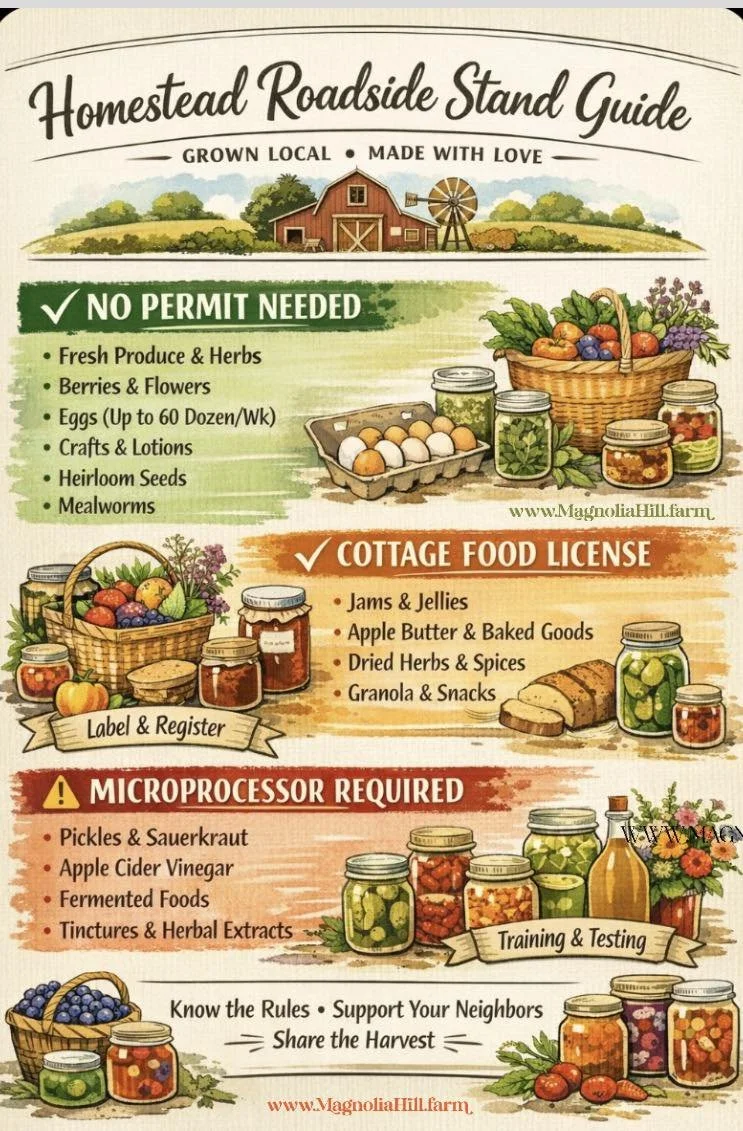
In most states, you can sell the following directly to consumers without a cottage food license:
Fresh vegetables and garden produce
Fresh or dried culinary herbs
Berries and small fruits
Flowers
Cultivated mushrooms (not wild-foraged)
Eggs, up to your state’s weekly limit
Heirloom seeds
Live or dried mealworms
Non-food handmade goods such as crafts, salves, chapstick, lotions, and magnesium spray
These items are ideal for roadside stands because they require minimal infrastructure and invite trust through transparency. A handwritten sign, clear pricing, and a clean display often matter more than anything else.
This is the heart of local food systems… neighbors serving neighbors!
Selling With a Cottage Food License: Expanding From the Home Kitchen
Once you begin making food in your home kitchen, most states require a cottage food or home-based food license. This registration exists to support small producers while maintaining basic food safety standards.
With a cottage license, homesteaders are typically allowed to sell shelf-stable foods such as:
Jams, jellies, and preserves
Apple butter and fruit butters
Baked goods including bread, cookies, muffins, and cakes
Dried herbs, spice blends, and seasoning mixes
Snack mixes, granola, trail mix, and popcorn
Shelf-stable syrups
These foods must be sold directly to consumers, properly labeled, and kept under an annual sales cap. Wholesale, shipping, and restaurant sales are usually prohibited.
Cottage food laws were designed with small producers in mind. They offer a legal, accessible way to share homemade food without needing a commercial kitchen.
When Additional Licensing Is Required:
Some of the most traditional homestead foods, especially fermented and preserved items require additional training or certification due to the way they’re processed.
These products often include:
Pickles and pickled peppers
Sauerkraut
Fermented salsa and fermented ketchup
Apple cider vinegar
Tinctures and herbal extracts
Pressure-canned or low-acid foods
Selling these items legally usually involves becoming a microprocessor or using a commercial kitchen, along with approved recipes, food safety training, and additional oversight.
These steps aren’t barriers — they’re safeguards. And for many homesteaders, they’re a natural next phase once experience and confidence grow.
Why This Matters:
Local food systems don’t rebuild themselves overnight.
They’re rebuilt slowly. One garden, one stand, one neighbor at a time.
When different households grow different things and share what they do best, communities become more resilient. Gaps in the grocery store matter less. Trust matters more. Food becomes personal again.
We don’t have to do EVERYTHING, but this allows us to do something meaningful!
Start with what you already have.
Learn the rules.
Grow into the rest.
Please share with your community! I’d love to see every street peppered with these!! 
🌸 Created by Magnolia Hill Homestead
Because thriving homestead communities start with shared knowledge